What is Gemmotherapy? The Complete Guide to Plant Bud Therapy
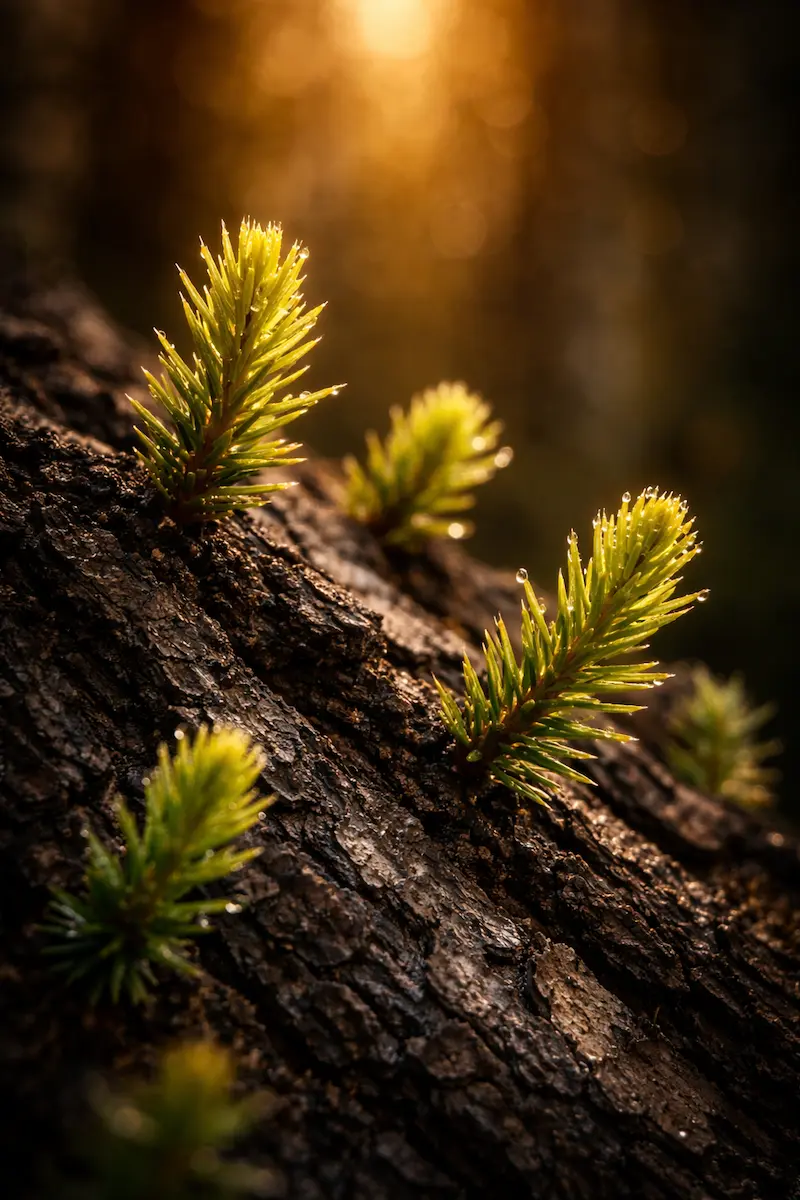
Every living plant contains within its growth points a biological intelligence that the rest of its structure does not possess. The bud, the young shoot, the rootlet tip: these are the sites where the plant's entire developmental programme is concentrated, where cell division is most rapid, where the chemical compounds that drive growth, repair, and adaptation are present in their highest concentrations. Gemmotherapy is the therapeutic discipline built on this observation, using precisely prepared extracts of these embryonic plant tissues to support the body's own capacity for repair, regulation, and renewal.
The name derives from the Latin gemma, which carries a double meaning: bud or growth point, and precious stone. Both meanings are intentional. The bud is at once the biological origin point of the plant and something of rare concentrated value. The second root is from the Greek therapeia, meaning care or treatment. Gemmotherapy is a system of natural medicine developed in Europe in the twentieth century, grounded in the biological sciences of embryology and phytochemistry, and refined over decades of clinical application into one of the most sophisticated and precisely targeted approaches in the natural health field.
The Messenger Principle: Embryonic Tissue as Biological Communicator
The starting point for understanding how gemmotherapy works is the concept of the embryonic tissue as a biological messenger rather than a pharmacological agent. The bud extract does not act on the body in the way that a drug molecule acts on a receptor. It presents to the body's regulatory systems a concentrated array of biological information: growth factors, phytohormones, nucleic acid precursors, enzymatic cofactors, and trace mineral complexes, all in the proportions and relationships that characterise the living embryonic tissue at the moment of its greatest biological activity.
The body's regulatory systems respond to this information according to their own intelligence. The extract does not force a biological outcome. It creates the conditions in which the body's own repair, detoxification, and regulation processes can operate more effectively. This is the essential distinction between gemmotherapy and pharmacological medicine, and it is also the reason that gemmotherapy's effects unfold over weeks and months rather than hours and days.
Growth Factor Signalling: The First Mechanism
The most directly measurable mechanism of gemmotherapy action is the delivery of phytohormones and growth factors present in high concentrations in the embryonic plant tissue. These include auxins, which govern cell elongation and differentiation; gibberellins, which regulate growth and cellular development; cytokinins, which play a central role in cellular division and renewal; and abscisic acid, which is involved in the plant's stress response and adaptive biology.
These compounds are not human hormones and do not function as direct hormone substitutes. However, their interaction with mammalian cellular systems has been the subject of growing research interest, particularly in the context of cellular renewal pathways. The plant growth factors appear to act as informational modulators: supporting the biological signalling environments in which the body's own regenerative processes function, rather than replacing those processes.

The Nucleic Acid Dimension: Information Transfer
The actively dividing cells of embryonic plant tissue contain concentrations of RNA precursors, enzymatic machinery of cellular replication, and nucleoprotein complexes that are not present in mature plant cells that have completed their differentiation. This nucleic acid richness is understood in gemmotherapy to carry an informational dimension beyond straightforward biochemistry.
The working model in the gemmotherapy clinical tradition is not that these nucleic components introduce foreign genetic information into the body's cells, but that they provide a biological signal environment that supports the body's own cellular renewal processes. The concentrations involved are not pharmacological; they operate in the range of biological signalling rather than direct molecular intervention.
The Drainage Principle: Cellular Detoxification as Prerequisite
One of the most important and clinically distinctive aspects of how gemmotherapy works is the drainage principle. Before the terrain can be effectively supported and renewed, the accumulated cellular waste products, metabolic byproducts, and toxic burdens that impair cellular function must be cleared. Gemmotherapy addresses this through specific buds with pronounced drainage action on particular organ systems.
The liver, kidneys, lymphatic system, and connective tissue are the primary drainage pathways, and each has corresponding bud extracts with specific affinity for supporting their clearance function. Juniperus Communis (Juniper) acts on hepatic and renal drainage; Betula Pubescens (Birch) on lymphatic and renal clearance; Rosmarinus Officinalis (Rosemary) on hepatic function. In clinical gemmotherapy practice, drainage protocols are frequently initiated before or alongside the primary terrain support protocol, because a congested drainage system limits the therapeutic depth that any subsequent intervention can achieve.
Terrain-Level Action: What Working on the Terrain Actually Means
The phrase 'acting on the terrain' is central to gemmotherapy's therapeutic rationale, but it requires concrete definition to be clinically meaningful. The terrain, in the gemmotherapy context, comprises several measurable biological parameters: acid-base balance, inflammatory load, hormonal environment, oxidative stress burden, immune competence, detoxification capacity, and the functional integrity of the organ systems that regulate all of the above.
When gemmotherapy acts on the terrain of the cardiovascular system, for example, it does not simply lower a blood pressure reading. It acts on the inflammatory status of the arterial wall, the elasticity of the vascular smooth muscle, the adrenal rhythm that drives cortisol-related vascular tension, and the renal fluid management that contributes to systemic pressure. Each of these is a terrain parameter. Improving them does not produce an immediate, measurable pharmacological effect. It produces a gradual, cumulative improvement in the biological environment from which healthy cardiovascular function emerges.
This terrain orientation means that gemmotherapy's effects are often seen across multiple systems simultaneously, because the terrain parameters it improves are shared across those systems. An individual using Ribes Nigrum for its anti-inflammatory adrenal support may notice improvements in joint comfort, sleep quality, immune resilience, and energy levels simultaneously, because the adrenal-inflammatory axis underpins all of these domains at once.
Organ Affinity: How Specific Buds Target Specific Systems
One of the most precise dimensions of gemmotherapy's clinical framework is the concept of organ affinity: each bud extract has a primary affinity for specific organ systems and biological processes, derived from the ecological and biochemical character of the plant. This affinity is not metaphorical. It is reflected in the specific phytohormone and growth factor profiles of the embryonic tissue, which determine the biological systems those compounds interact with most directly.
Ribes Nigrum (Blackcurrant): The Adrenal-Inflammatory Axis
Ribes Nigrum is the master anti-inflammatory bud of gemmotherapy. Its primary mechanism is stimulation of the adrenal cortex, supporting the body's endogenous cortisol production through the HPA axis rather than replacing it with exogenous corticosteroids. This adrenal cortex-stimulant action produces a natural anti-inflammatory effect across all systems, making Ribes Nigrum the foundational bud for any protocol addressing chronic inflammation, allergic reactivity, autoimmune terrain, or adrenal depletion.
Sequoia Gigantea (Giant Redwood): The Anabolic-Structural Axis
Sequoia Gigantea acts on the anabolic hormonal terrain, bone density, connective tissue integrity, and systemic vitality, making it gemmotherapy's primary agent for structural renewal and the loss of anabolic tone associated with biological ageing. Its organ affinity includes the hypothalamic-pituitary axis (governing hormonal orchestration), bone and cartilage tissue, and the mitochondrial function that underpins cellular energy production.
Ficus Carica (Fig): The Neuroendocrine-Digestive Axis
Ficus Carica occupies a unique position in gemmotherapy's materia medica as the primary bud for the nervous system-digestive system interface, the gut-brain terrain. Its action encompasses the vagal nervous system, gastric acid regulation, emotional-digestive reactivity, and the neuroendocrine connections that link psychological stress to digestive dysfunction. Its use in anxiety with digestive component, in ulcer terrain, and in the neurological presentations associated with digestive stress reflects this dual affinity.
Olea Europaea (Olive): The Vascular-Metabolic Axis
Olea Europaea carries a primary affinity for arterial wall integrity, blood pressure regulation, and lipid metabolism terrain. Its vascular action addresses arterial rigidity, endothelial function, and the atherosclerotic process at the terrain level. The olive's Mediterranean ecological history as a symbol of longevity is reflected in the specific vascular and metabolic biology of its bud extract.
The Synergy Principle: Why Combinations Work
Clinical gemmotherapy is rarely a single-bud practice. The most effective protocols combine two to three complementary buds whose terrain actions address the same system from different angles. Ribes Nigrum combined with Sequoia addresses the adrenal-inflammatory and anabolic-structural dimensions of ageing simultaneously. Olea Europaea combined with Crataegus Oxyacantha addresses the vascular wall and the cardiac function terrain together.
The Herbolistique formula range translates these synergistic combinations into validated multi-bud formulas, removing the clinical complexity of bud selection and combining the terrain actions most relevant to each health domain into single preparations. The synergy of the combination is not simply additive; the buds interact at the terrain level to produce an effect greater than the sum of their individual contributions.
The Response Timeline: What to Expect and When
Because gemmotherapy acts on the terrain rather than on symptoms directly, its response timeline reflects the timescales of biological change rather than pharmacological override. Initial responses, including improved energy, sleep quality, and general resilience, are typically reported within three to six weeks of consistent use. These early improvements reflect the drainage effect and the initial reduction in inflammatory and oxidative burden.
Deeper terrain changes, including improvements in vascular markers, hormonal balance, structural integrity, and the sustained cognitive or metabolic improvements that reflect genuine terrain-level shift, build over three to twelve months of consistent protocol use. The standard recommendation from clinical practice is a minimum of two months of uninterrupted use to assess initial terrain response, with six months as the benchmark for chronic or longstanding conditions.
Explore the Herbolistique Range
Every Herbolistique formula is built on the synergistic terrain-action principles described on this page: precise bud combinations, alcohol-free HG options, and manufacturing standards that preserve the full biological complexity of the embryonic tissue.
Related Reading
What is Gemmotherapy? — The complete foundational introduction to plant bud therapy.
The Production Process: From Bud to Bottle — Harvest timing, macération mère, dynamisation and the quality markers of a genuine preparation.
Gemmotherapy vs Herbal Medicine — What distinguishes the two disciplines clinically and scientifically, and where they complement each other.
Gemmotherapy in Cyprus — Why the island has particular resonance for this discipline, and how Herbolistique Cyprus fills the market gap.