What is Gemmotherapy? The Complete Guide to Plant Bud Therapy
Every living plant contains within its growth points a biological intelligence that the rest of its structure does not possess. The bud, the young shoot, the rootlet tip: these are the sites where the plant's entire developmental programme is concentrated, where cell division is most rapid, where the chemical compounds that drive growth, repair, and adaptation are present in their highest concentrations. Gemmotherapy is the therapeutic discipline built on this observation, using precisely prepared extracts of these embryonic plant tissues to support the body's own capacity for repair, regulation, and renewal.
The name derives from the Latin gemma, which carries a double meaning: bud or growth point, and precious stone. Both meanings are intentional. The bud is at once the biological origin point of the plant and something of rare concentrated value. The second root is from the Greek therapeia, meaning care or treatment. Gemmotherapy is a system of natural medicine developed in Europe in the twentieth century, grounded in the biological sciences of embryology and phytochemistry, and refined over decades of clinical application into one of the most sophisticated and precisely targeted approaches in the natural health field.
The Origin of Gemmotherapy: From Embryonic Botany to Clinical Practice
Gemmotherapy was developed in the 1950s and 1960s by Pol Henry, a Belgian agronomist and naturopath who made a foundational observation in his study of plant ecology: that the embryonic tissues of plants, their buds, young shoots, and rootlet tips, contained a phytochemical profile radically different from that of mature plant tissue, and that this profile corresponded to the period of greatest biological activity in the plant's life cycle.
Henry developed a method of preparing extracts from these embryonic tissues using a glycerin and alcohol maceration process that preserved the full complexity of their chemical content, and began applying these extracts therapeutically. He called his system phytoembryotherapy, a name that reflects its foundational principle: the therapeutic use of the embryonic phase of plant development.
In the 1960s, the Belgian physician Max Tétau encountered Henry's work and recognised in it the clinical potential that Henry's agronomic background had not fully developed. Tétau refined the preparation method, systematised the materia medica, integrated the approach with homoeopathic dilution and dynamisation techniques to produce the standard 1DH preparation that most gemmotherapy products now use, and gave the discipline its current name: gemmotherapy. He published the first clinical systematisation of the field and trained the generation of practitioners who established gemmotherapy as a recognised discipline in European natural medicine.
From Belgium and France, gemmotherapy spread through Italy, Spain, Portugal, and across the European natural medicine community over the following decades. The clinical literature grew alongside the practice, and the laboratory science of embryonic plant tissue biochemistry progressively validated what clinical observation had established: that these tissues contain concentrations of biologically active compounds absent from or present only in trace quantities in mature plant extracts.
What Makes Embryonic Plant Tissue Biologically Different
The scientific foundation of gemmotherapy rests on a principle from plant developmental biology: embryonic and meristematic tissues, the actively dividing growth points of the plant, have a biochemical composition that is fundamentally different from that of mature plant tissue, and that difference is therapeutically significant.
Growth Factors and Phytohormones
Embryonic plant tissues contain high concentrations of the phytohormones that govern plant growth and development: auxins, gibberellins, cytokinins, and abscisic acid. These are not human hormones, but they carry biological information that interacts with mammalian cellular systems in ways that mature plant tissue does not. Cytokinins in particular have attracted significant research interest for their role in cellular renewal and their capacity to support the cellular division processes that underlie tissue repair and regeneration.
Nucleic Acids and Growth Information
The rapidly dividing cells of embryonic plant tissue contain concentrations of nucleic acids, DNA and RNA precursors, and the enzymatic machinery of cellular replication that are not present in mature plant cells that have completed their differentiation. These nucleic acid components are believed to carry the informational dimension of gemmotherapy's action: not introducing foreign genetic material, but providing biological signals that support the body's own cellular renewal processes.
Vitamins, Minerals and Enzymatic Cofactors at Peak Concentration
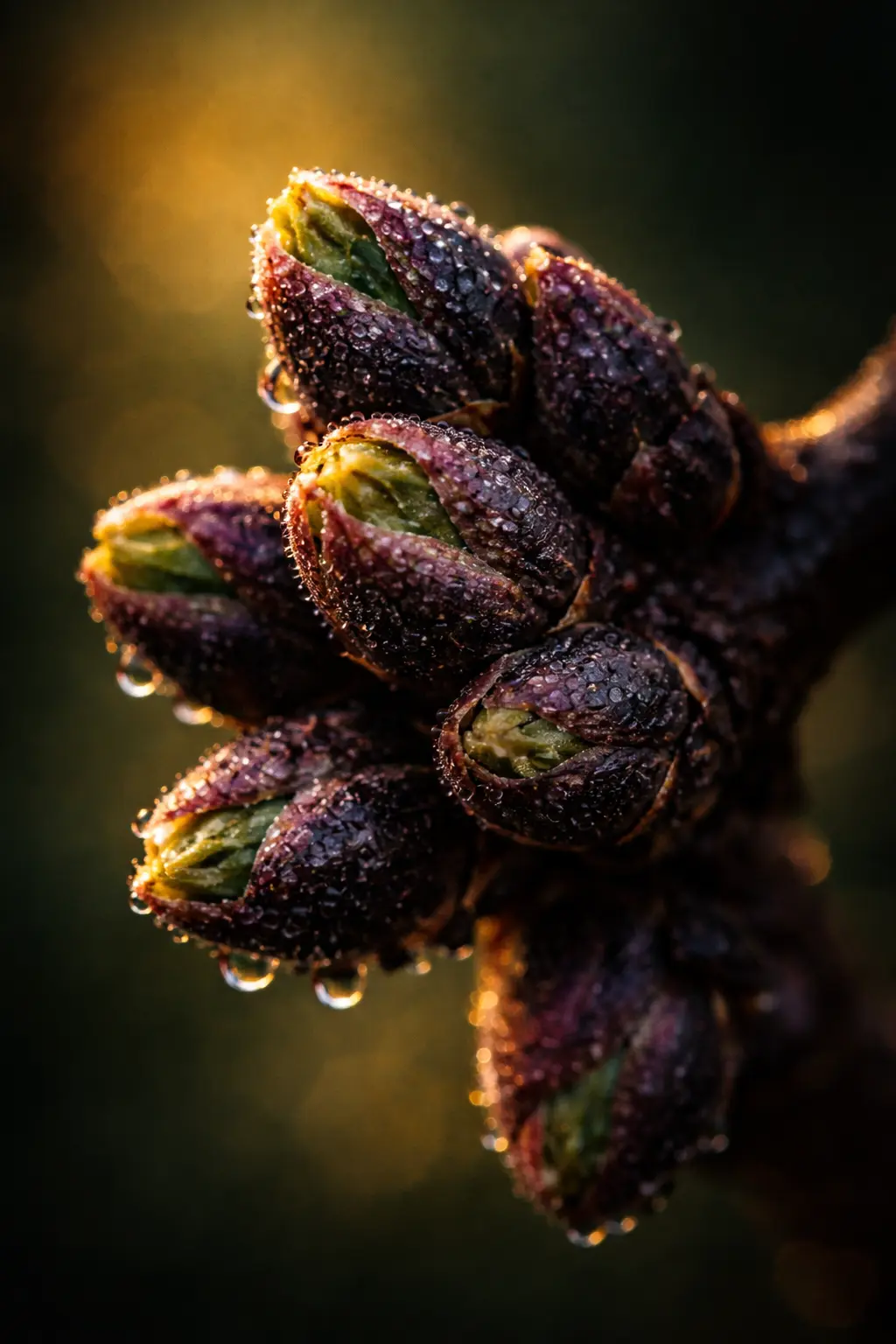
The spring bud represents the moment of maximum metabolic investment by the plant. Every resource the plant has stored over the winter is concentrated in the growth point at the moment of its opening. Vitamins C and E, the full B-complex, trace minerals including zinc, selenium, and manganese, and the enzymatic cofactors of the plant's primary metabolic pathways are all present in the bud at concentrations that mature tissue, whose metabolic demands have stabilised, does not maintain.
Cellular Permeability and Bioavailability
Mature plant tissue is enclosed by cellulose cell walls that significantly limit the bioavailability of its active compounds in oral preparations. The cells of embryonic tissue have thinner, less lignified walls with greater permeability, making their contents more directly accessible to the extraction process and ultimately to the biological systems of the individual using the preparation. This structural difference contributes to the depth of action that distinguishes gemmotherapy preparations from conventional herbal extracts of the same plant species.
Gemmotherapy and Terrain Medicine: The Foundational Principle
To understand what gemmotherapy does and why it works differently from most natural health approaches, it is necessary to understand the concept of terrain medicine, the philosophical and clinical framework within which gemmotherapy operates.
Terrain medicine is the tradition in natural and integrative health that understands disease not primarily as an external agent acting on a passive body, but as the expression of an internal biological environment, the terrain, that has become susceptible to dysfunction. The terrain is the sum of the body's biological milieu: its acid-base balance, its inflammatory status, its hormonal environment, its detoxification capacity, its nervous system regulation, its immune competence, and the functional integrity of its organ systems.
Gemmotherapy acts on the terrain rather than on the symptom. A gemmotherapy protocol for elevated blood pressure does not directly lower blood pressure through a pharmacological mechanism. It acts on the vascular terrain, the arterial wall integrity, the adrenal cortisol rhythm, the renal drainage capacity, and the inflammatory burden on the vascular system, supporting the biological conditions from which healthy blood pressure emerges naturally.
This distinction is what makes gemmotherapy suitable for long-term use as a health maintenance and longevity practice, not merely as a therapeutic intervention for acute conditions. It is also what makes it compatible with conventional medical management: acting on a different biological level, it does not interfere with pharmaceutical mechanisms but complements them by improving the terrain on which those mechanisms operate.
Which Plants Are Used in Gemmotherapy and Why
Not every plant species yields embryonic tissue with therapeutically significant properties. The gemmotherapy materia medica developed and validated over seventy years of clinical practice includes approximately fifty plant species whose bud and young shoot extracts have defined, reproducible, terrain-level actions on specific organ systems and biological processes.
The selection of plants in the materia medica reflects the ecological principle that Henry identified at the origin of the discipline: that the biological intelligence of the embryonic tissue reflects the adaptive strategies of the mature plant in its ecological environment. The blackcurrant bush, Ribes Nigrum, grows in environments of high oxidative and inflammatory challenge, and its bud extract carries anti-inflammatory and adrenal-supportive actions that reflect this adaptive biology. The giant redwood, Sequoia Gigantea, among the most ancient and massive trees on earth, carries embryonic tissue with anabolic, bone-supportive, and vitality-sustaining actions that mirror the extraordinary longevity biology of the mature tree. The fig tree, Ficus Carica, with its deep root system and its unique position at the intersection of the nervous system and the digestive terrain in traditional Mediterranean medicine, yields a bud extract with precisely the neuroendocrine-digestive action that its ecological and ethnobotanical history would suggest.
What Gemmotherapy Is Not: Clarifying the Distinctions
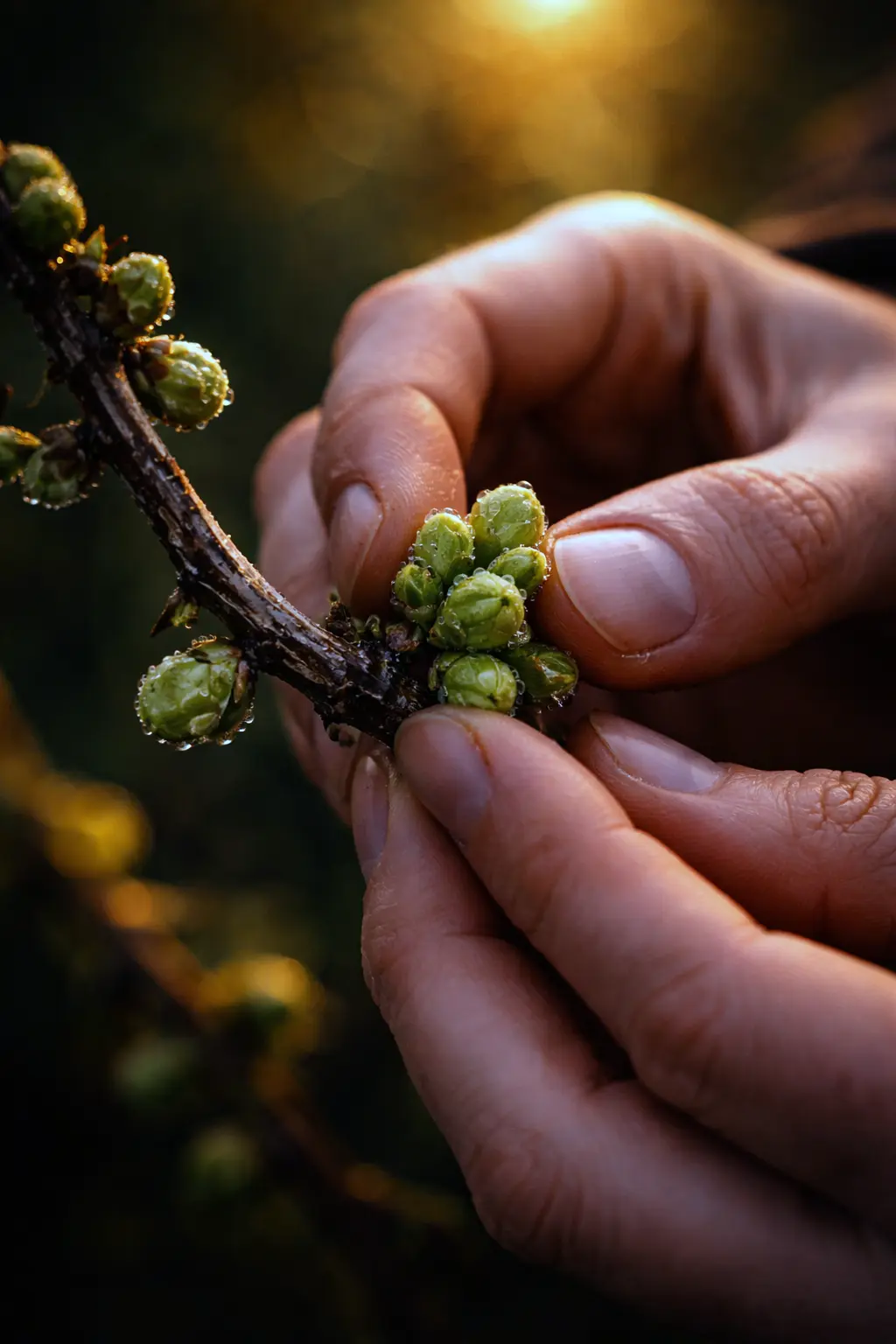
The preparation of gemmotherapy extracts follows a precise protocol that preserves the full biological complexity of the embryonic tissue. Buds and young shoots are harvested at the precise moment of their opening, when the concentration of growth factors, phytohormones, and biologically active compounds is at its seasonal peak. A bud harvested a week before or after its optimal opening point will have a significantly different phytochemical profile, and the clinical consistency of gemmotherapy preparations depends on the precision of this timing.
Immediately after harvest, the fresh plant material is macerated in a solution of glycerin, alcohol, and water, which extracts the full range of water-soluble and fat-soluble active compounds simultaneously. The glycerin component is particularly important: it acts as a preservative that maintains the biological activity of the growth factors and phytohormones that would be degraded by alcohol alone or by the drying process that conventional herbal preparation requires. The maceration produces the macérat mère, the full-complexity mother extract that is the starting point for the final product.
The macérat mère is then diluted to the standard 1DH (first decimal Hahnemannian) potency and dynamised through mechanical succussion, a step that refines the biological information of the preparation. The final product is a stable glycerin and alcohol-based liquid taken in drops. In the Herbolistique range, the HG line (Herbolistique Glycériné) replaces the alcohol component entirely with glycerin, producing an alcohol-free preparation with identical active content and broader clinical applicability.
Gemmotherapy is not herbalism
Classical herbalism uses the mature aerial parts of plants, leaves, flowers, stems, and roots, prepared as teas, tinctures, or dried extracts. The active compounds targeted are those present in mature plant tissue: alkaloids, flavonoids, terpenes, and glycosides. Gemmotherapy uses exclusively the embryonic tissues of the plant, which have a fundamentally different phytochemical composition, and its clinical logic is terrain-based rather than compound-specific.
Gemmotherapy is not homoeopathy
Homoeopathy works through high dilutions that go far beyond any measurable presence of the original substance. Gemmotherapy preparations use a single low dilution (1DH) at which measurable concentrations of active compounds remain present. The glycerin-alcohol maceration process and the 1DH dilution with dynamisation were borrowed from homoeopathic pharmacy as a preparation technique, not as a theoretical framework.
Gemmotherapy is not nutritional supplementation
Nutritional supplements provide specific identified compounds at defined doses targeting defined deficiencies or biological pathways. Gemmotherapy provides the full biological complexity of the embryonic plant tissue, including compounds that have not been individually identified or standardised, acting on the terrain as a whole rather than on specific isolated pathways. Its action is synergistic and systemic rather than targeted and additive.
Who Uses Gemmotherapy and For What
For the health-conscious individual
Adults committed to long-term health maintenance use gemmotherapy as a terrain support practice: protecting cardiovascular health, supporting cognitive vitality, maintaining hormonal balance, and providing the anti-inflammatory and detoxification support that the modern biological environment demands. The absence of side effects, the compatibility with conventional medications, and the broad-spectrum systemic action of formulas like GEMMO SENIOR make gemmotherapy a natural fit for the individual who approaches health as a long-term investment rather than a crisis response.
For the individual with specific health concerns
The health domains covered by the Herbolistique satellite range represent the most common presentations for which gemmotherapy is sought: joint and mobility issues, hormonal imbalance, metabolic dysfunction, stress and sleep disruption, cognitive decline, digestive and hepatic problems, cardiovascular health, women's health, sports recovery, and the systemic vitality concerns of biological ageing. Within each of these domains, gemmotherapy provides terrain-level support that addresses the biological root of the presentation rather than its symptomatic surface.
For health professionals
Naturopaths, integrative physicians, herbalists, nutritional therapists, and other complementary health practitioners use gemmotherapy as a terrain-level foundation for their clinical protocols. The precision of the materia medica, the compatibility with other therapeutic approaches, and the availability of the alcohol-free HG line for populations with specific contraindications make gemmotherapy a clinically versatile tool that complements rather than replaces other interventions.
An Important Note on Use
Gemmotherapy preparations are long-term terrain protocols requiring patience and consistency. Treatment periods of two to six months are standard, as the terrain-level changes that produce lasting results do not occur overnight. Standard preparations contain alcohol and are therefore contraindicated for individuals with alcohol dependency, pregnant women, and children. The Herbolistique HG line addresses this with a fully alcohol-free formulation. Always consult a qualified health professional before beginning any gemmotherapy protocol alongside existing medical treatment.
Explore the Full Herbolistique Gemmotherapy Range
The complete Herbolistique range is available through the Herbolistique Cyprus online store, manufactured in France from organically certified or wild-harvested plants with immediate on-site maceration and no freezing at any stage of production.
Explore Gemmotherapy Further
How Gemmotherapy Works — The mechanisms: growth factor signalling, terrain-level action and organ affinity explained.
The Production Process: From Bud to Bottle — Harvest timing, macération mère, dynamisation and the quality markers of a genuine preparation.
Gemmotherapy vs Herbal Medicine — What distinguishes the two disciplines clinically and scientifically, and where they complement each other.
Gemmotherapy in Cyprus — Why the island has particular resonance for this discipline, and how Herbolistique Cyprus fills the market gap.